No products in the cart.

No products in the cart.

100% Secure Checkout!
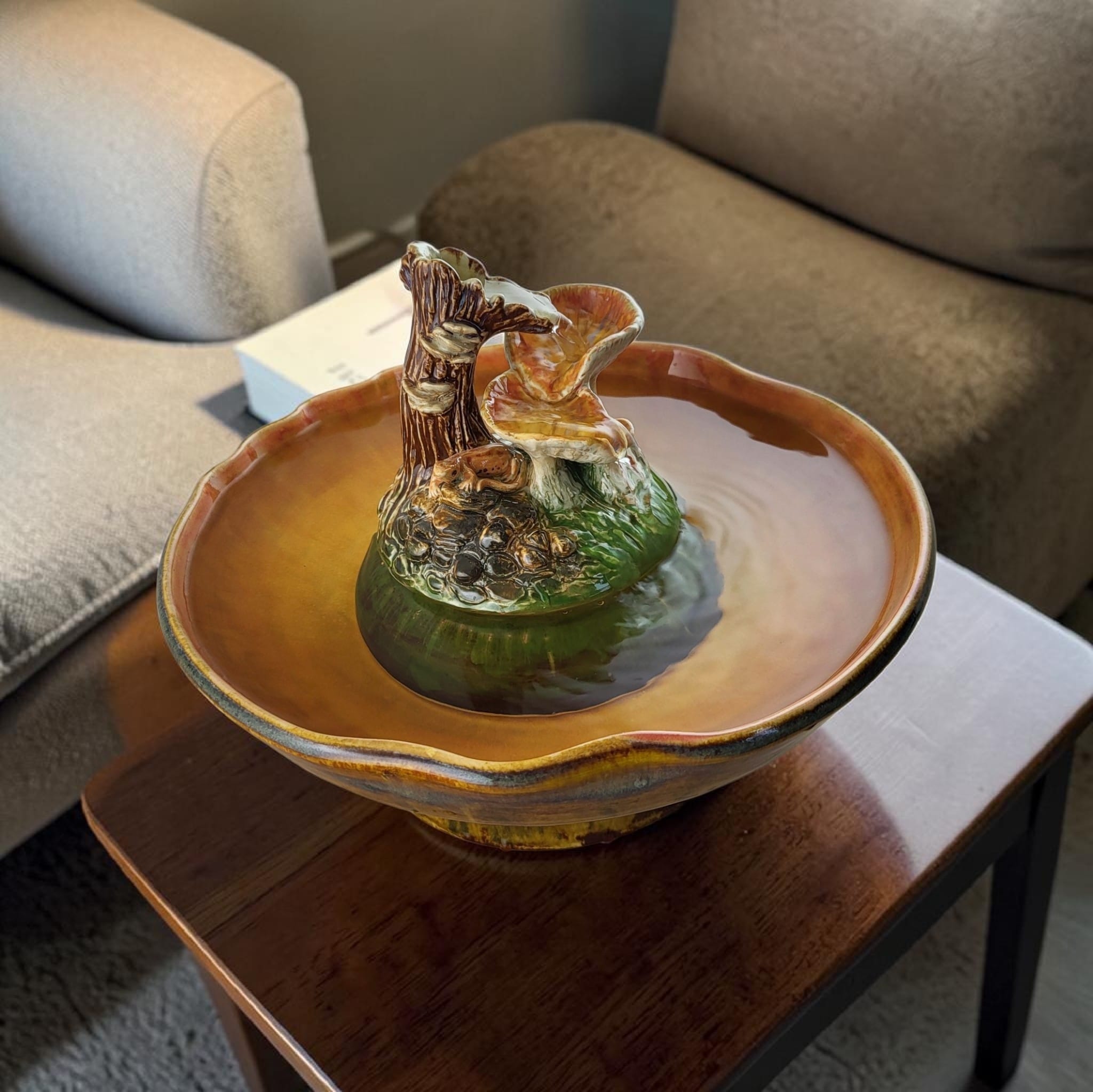
handmade ceramic mushroom & slamander fountain

The Sound of Water

Why the sound of water changes a Room & why we respond to it without thinking

There are sounds we notice—and sounds we feel. The sound of flowing water belongs to both and especially the second kind. You don’t analyze it. You don’t focus on it. And yet, within moments of hearing it, a small transformation happens.

After a few moments as we relax into  room, things softens.  Our breathing slows, we relax even deeper. The space feels calm. The gentle sound of water does this. Not dramatically, but subtely.

Gentle Water Sounds Replace Noise Without Creating Silence

Most spaces are filled with small, constant interruptions. Appliances humming. Distant traffic. The faint buzz of electricity. Even silence, when it’s too complete, can feel imposing.

Flowing water does something unusual—it fills the space without overwhelming it. It doesn’t demand attention. It gives your mind something gentle to rest against.

Although you cease focusing on it very quickly, it continues to have an effect.

Water Sounds Signal Safety to the Brain

There’s a reason water has this effect—and it goes back much further than interior design.

For most of human history, the sound of water meant something essential:

  • A reliable source of life
  • A place of rest
  • A safe environment
  • Refreshment

That association hasn’t disappeared. Even now, our nervous system recognizes it instantly— before we have time to think about it.

It Softens the Edges of a Room

Hard surfaces reflect sound. Sharp corners and hard lines create visual tension.

Water changes both. The sound of water diffuses through the acoustic space, making everything feel less abrupt. It might be said that the water sound embraces everything in the room, unifying it all with a gentle undertone. That, along with the fountain form softens and relaxes a room, just a bit.


At the same time, the visual movement—however small—breaks the stillness that can make a room feel static. Flowing water is like having something friendly and alive in the room. The result isn’t dramatic. It’s something quieter: a sense that the room itself has a life.

It Creates a Rhythm You Don’t Have to Follow

Music asks something of us – focus. Conversation requires attention. Even silence can feel expectant, as if something is, or we are, waiting for something to happen.


Moving water asks nothing. It flows at its own pace, steady and unchanging.  We don’t need to match it—we simply exist alongside it.

And in that, there’s a kind of relief. A peace we all so crave.

Why Small Fountains Can Have a Large Effect

You might expect this kind of impact from a large outdoor feature.

But indoors, something interesting happens.

Because the space is contained, even a small fountain becomes present in a meaningful way. The sound doesn’t get lost—it settles into the room.

A compact, thoughtfully made piece—especially one with natural materials and form—can carry that effect surprisingly far.

A Final Thought

You don’t need to understand why the sound of water works. You only need to notice that it does. Set a fountain in a room. Let it run.

Then sit with it for a moment longer than you normally would.

The change is subtle. But once you feel it, it’s hard to imagine the space without it. In fact, try that. Unplug the fountain or move it and feel the difference in the room. You’ll likely want it back on.

If you’re curious as to how all this would translate to your own space, you might find this post helpful.


And if upkeep is a concern, please take a look at this post.

Shopping Cart